
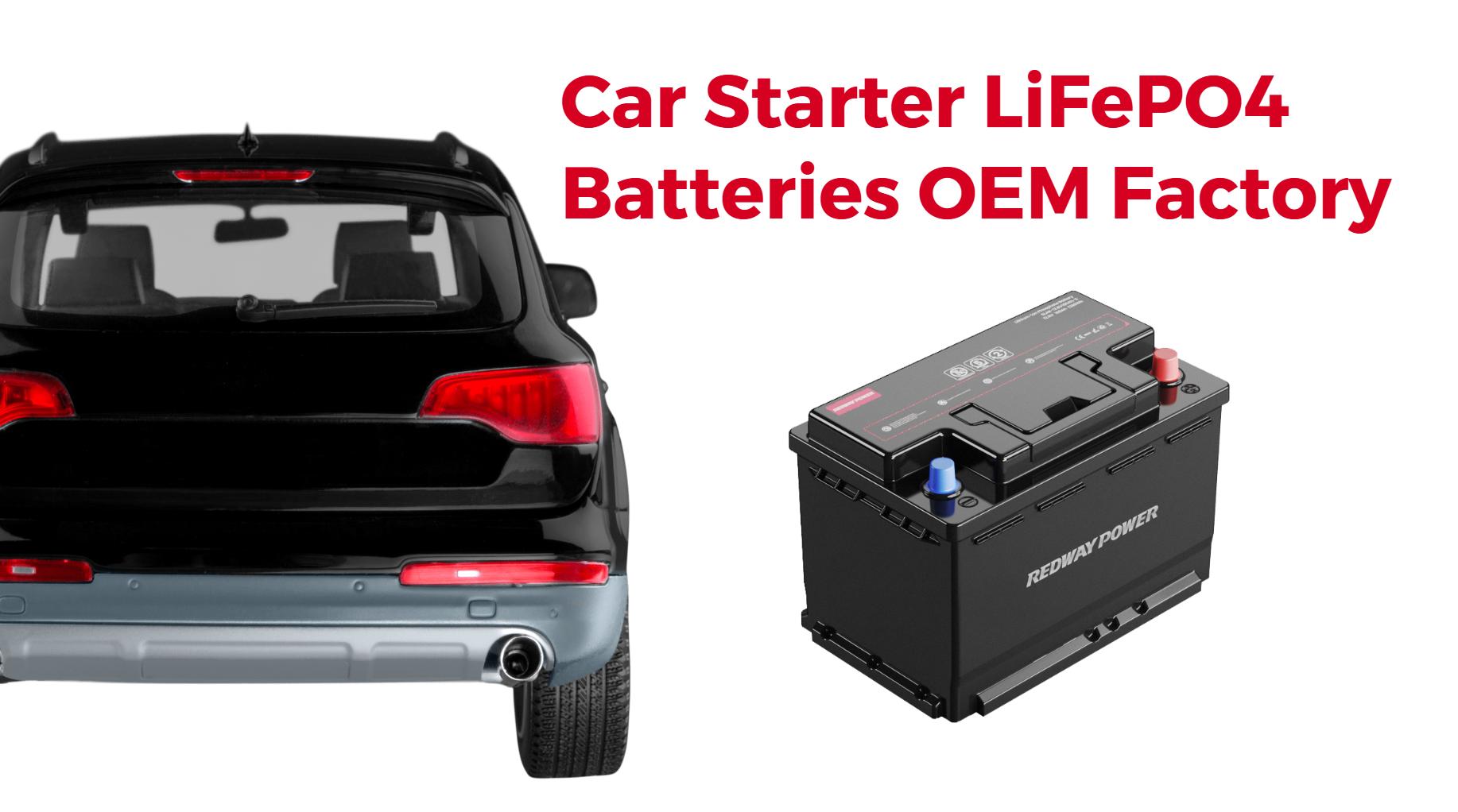
What Are Common Issues with LiFePO4 Car Starter Batteries?
LiFePO4 car starter batteries deliver strong performance, long service life, and lightweight advantages. However, they may face challenges such as cold-weather efficiency loss, voltage incompatibility in older vehicles, higher initial costs, and the need for specialized chargers. When properly installed and maintained, these batteries significantly outperform traditional lead-acid units in lifespan, safety, and reliability.
How Cold Weather Affects LiFePO4 Car Battery Performance
Low temperatures reduce ion mobility in LiFePO4 cells, decreasing their cranking capacity by up to 30% below 0°C. While premium batteries include built-in heaters, users in extreme climates can improve performance with insulation blankets or heating wraps.
For example, a 12V 60Ah LiFePO4 starting battery rated at 600A CCA may drop to around 540A in subzero temperatures without thermal protection. Heated models, like Redway ESS’s advanced LiFePO4 series, integrate smart thermal management that automatically regulates internal temperature to maintain high cranking performance even at –20°C.
| Temperature | LiFePO4 (Heated) | LiFePO4 (Unheated) | AGM Battery |
|---|---|---|---|
| –10°C | 780 CCA | 620 CCA | 710 CCA |
| –20°C | 720 CCA | 540 CCA | 590 CCA |
| –30°C | 680 CCA | 410 CCA | 480 CCA |
Redway ESS’s thermal control solutions demonstrate up to 20% better cold-start efficiency compared to standard lithium alternatives.
Why Some Vehicles Reject LiFePO4 Starter Batteries
Vehicles equipped with smart alternators or complex ECU systems may misinterpret the flat voltage curve of LiFePO4 batteries as a low-charge signal, triggering warning lights or charging errors. Adapters or reprogramming solutions often resolve this issue.
Redway ESS addresses compatibility by designing BMS units that communicate directly with automotive ECUs via CANbus, ensuring stable voltage signals and consistent alternator operation across a wide range of vehicle models.
How LiFePO4 Charging Differs from Lead-Acid Batteries
LiFePO4 batteries charge using a specific 14.4–14.6V absorption range and constant current–constant voltage (CC–CV) algorithm. Using a standard lead-acid charger can cause undercharging or long-term cell imbalance.
A properly matched LiFePO4 charger ensures complete and balanced charging cycles, extending service life to over 4,000 cycles. Redway ESS integrates intelligent BMS charging management that adjusts input current dynamically to protect the cells and prevent overvoltage or overheating.
Are LiFePO4 Starter Batteries Cost-Effective Long-Term?
Although LiFePO4 batteries cost more upfront ($300–$600 vs. $100–$200 for lead-acid), their lifespan and efficiency make them more economical over time. Fleet studies show up to 62% lower total ownership costs over eight years.
| Cost Factor | LiFePO4 | AGM Battery |
|---|---|---|
| 5-Year Replacement Count | 0.3 | 2.1 |
| Total Energy Wasted | 12 kWh | 87 kWh |
| Disposal Fees | $75 | $210 |
The 98% charge efficiency of LiFePO4 batteries also reduces alternator workload, fuel consumption, and maintenance costs. Redway ESS clients report up to $140 annual savings per vehicle due to lower maintenance and reduced replacement frequency.
Common Installation Mistakes That Damage LiFePO4 Batteries
Incorrect installation is one of the main causes of early battery failure. Reverse polarity connections can cause instant cell damage. Over-tightened terminals may crack connectors, while undersized cables cause voltage drops during high-load starts.
Professional installation with torque-controlled tools and properly gauged cables (4 AWG or larger) ensures optimal performance and safety. Redway ESS provides preconfigured wiring kits to minimize installation errors in OEM and aftermarket applications.
Long-Term Reliability of LiFePO4 Batteries
Modern LiFePO4 starter batteries retain about 90–92% capacity after five years of normal use. Models using graphene-enhanced anodes and smart BMS technologies, such as those developed by Redway ESS, can exceed 12–15 years of lifespan.
Cycle testing under SAE International standards confirms over 3,000 deep cycles at 80% depth of discharge, far outperforming conventional AGM batteries that typically last 4–6 years.
Recycling and Environmental Management
Only about 30% of LiFePO4 batteries are currently recycled, primarily due to limited collection systems. However, innovative recycling processes, such as hydrometallurgical recovery, achieve up to 95% lithium reclamation efficiency.
Redway ESS partners with certified recycling facilities that use low-energy solid-state recovery, reducing energy consumption by 70% compared to traditional smelting. Customers are advised to return used units to certified collection centers for safe, compliant processing.
Redway ESS Expert Views
“At Redway ESS, we believe LiFePO4 technology represents the future of automotive power systems. Our ongoing R&D focuses on AI-driven battery management, adaptive heating systems, and extended life-cycle chemistry. These innovations ensure our customers experience reliable, maintenance-free power solutions that surpass lead-acid in every measurable category.” — Redway ESS Engineering Team
Conclusion
LiFePO4 car starter batteries offer significant performance advantages, including lightweight design, long cycle life, and consistent power output. While initial setup and cost are higher, brands like Redway ESS have optimized compatibility, charging, and safety systems to deliver dependable, long-term performance. Proper installation, use of compatible chargers, and attention to temperature management ensure these batteries provide superior reliability and total cost efficiency over their lifetime.
FAQs
1. Can LiFePO4 car batteries explode during accidents?
No. LiFePO4 chemistry is inherently stable, with less than one-third the thermal runaway risk of NMC batteries. They meet and exceed SAE J2464 safety standards.
2. Do LiFePO4 batteries work with stop-start systems?
Yes. Advanced LiFePO4 models handle frequent engine restarts efficiently, maintaining consistent voltage under heavy cycling conditions.
3. How should I store a LiFePO4 car battery long-term?
Store it at 50% charge in a cool, dry environment (15–25°C). Recharge every six months to prevent over-discharge and maintain balance.
4. What causes LiFePO4 charging issues?
Incorrect charger voltage, cold-temperature charging, or BMS imbalance can cause problems. Always use a LiFePO4-compatible smart charger and avoid charging below freezing.
5. Are LiFePO4 batteries suitable for all vehicles?
They are compatible with most vehicles when installed with appropriate BMS communication and charging management. Redway ESS provides custom-fit OEM solutions for full compatibility.