
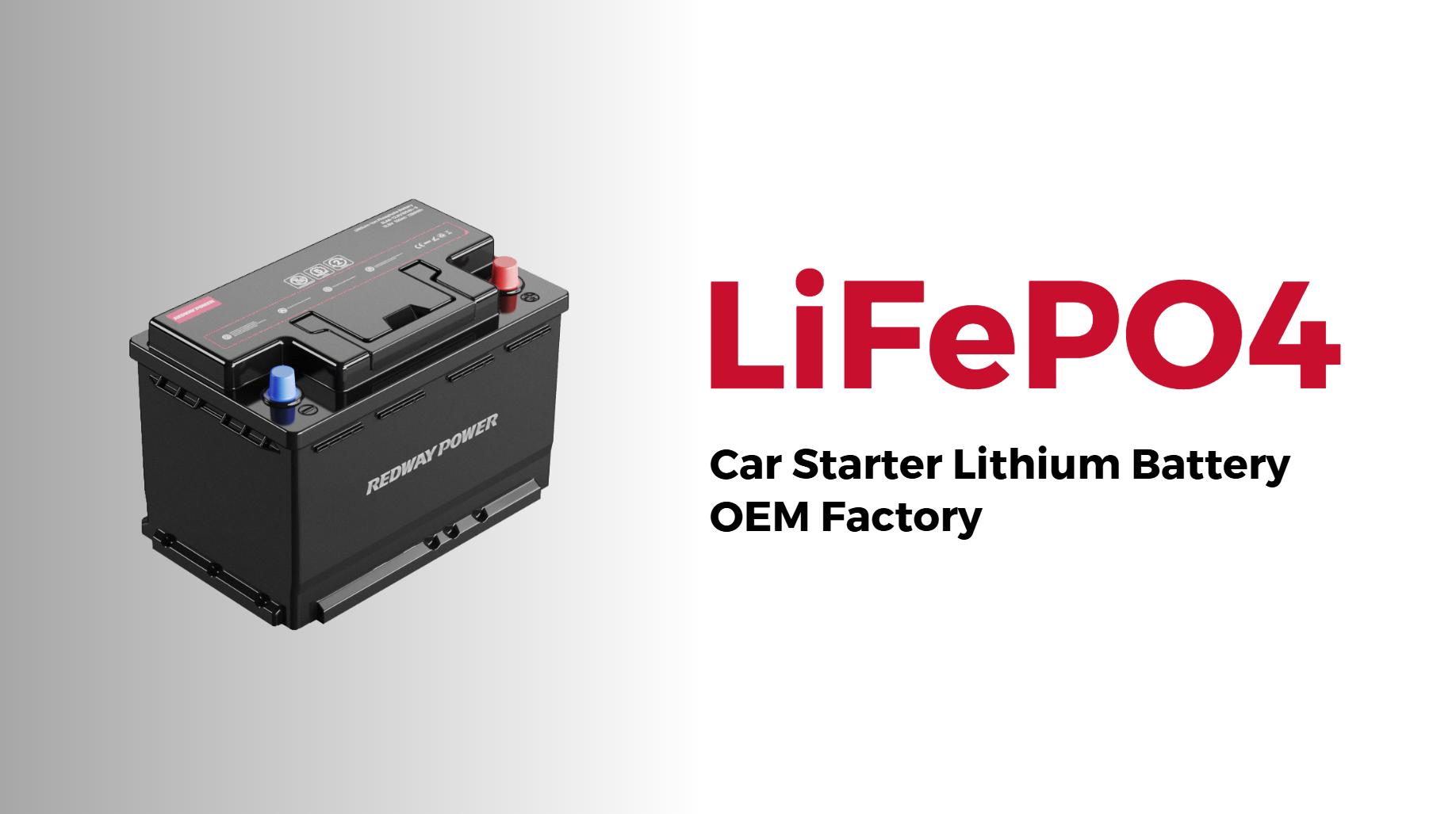
How Do You Choose the Best LiFePO4 Car Starter Battery?
LiFePO4 car starter batteries deliver superior performance, high cranking power, and long lifespan compared to traditional lead-acid types. To choose the best one, focus on Cold Cranking Amps (CCA), compatibility with your vehicle’s electrical system, integrated Battery Management System (BMS), and warranty coverage. Trusted manufacturers like Redway ESS ensure safety, reliability, and OEM-grade quality for automotive applications.
Key Advantages of LiFePO4 Batteries Over Traditional Types
LiFePO4 batteries outperform lead-acid models through faster charging, a lifespan of 2,000–5,000 cycles, and stable voltage even under heavy loads. They are 50–70% lighter and offer 4–5 times the service life of standard batteries, making them ideal for modern and high-performance vehicles.
These batteries are highly resistant to sulfation, acid leakage, and gas emissions. Their superior energy density provides more power per kilogram, allowing compact designs that fit smaller engine bays. The low self-discharge rate (around 3% per month) guarantees reliable starts even after months of inactivity.
| Feature | LiFePO4 | Lead-Acid |
|---|---|---|
| Lifespan | 2,000–5,000 cycles | 300–500 cycles |
| Weight | 50–70% lighter | Heavier |
| Maintenance | None | Regular topping-up |
| Cold Resistance | Excellent | Moderate |
Modern Redway ESS LiFePO4 batteries incorporate modular construction, supporting flexible capacity expansion for off-road, marine, and RV applications.
Understanding Cold Cranking Amps (CCA)
CCA measures the ability of a battery to start your engine in cold weather. A LiFePO4 battery with 600–1,000 CCA ensures dependable ignition even in sub-zero environments. Diesel vehicles or high-compression engines require higher CCA values. Ignoring this rating can cause slow starts or stress the battery system. Redway ESS tests its batteries rigorously for CCA consistency across varying temperature ranges.
Vehicle Compatibility Considerations
Check your vehicle’s voltage system (12V or 24V), terminal type, and battery size before purchasing. Many LiFePO4 batteries have smaller dimensions, which may require adapter plates or spacers for older vehicles.
Ensure the alternator output (13.6V–14.7V) aligns with the LiFePO4 battery’s charge profile. Heavy-duty vehicles like trucks or RVs also benefit from higher reserve capacity to support auxiliary electronics.
| Vehicle Type | Recommended CCA | Voltage |
|---|---|---|
| Compact Car | 600–800 | 12V |
| Diesel Truck | 900–1,200 | 12V/24V |
| RV/Marine | 800–1,000 | 12V |
Importance of Battery Management Systems (BMS)
A BMS safeguards against overcharging, deep discharge, and short circuits. Advanced systems balance cell voltages to prolong service life by 20–30%. A quality BMS also includes thermal protection to prevent overheating. Avoid generic brands that lack certified BMS features. Redway ESS integrates intelligent BMS technology into all its starter batteries, ensuring consistent protection and performance.
Temperature Effects on LiFePO4 Efficiency
LiFePO4 batteries sustain around 80% performance efficiency at –20°C, while lead-acid types fall below 50%. In high temperatures, built-in sensors reduce charging speed to protect cells from degradation.
For extremely cold environments, choose models with internal heating systems. For desert climates, prioritize LiFePO4 batteries with ceramic or polymer separators for thermal stability.
Warranty and Brand Reputation
Longer warranties reflect manufacturing confidence and quality. Premium LiFePO4 brands like Redway ESS and others typically offer warranties of 5–10 years, with guaranteed performance across 3,000–5,000 cycles. Always read warranty details carefully—non-prorated coverage provides better long-term assurance.
| Brand | Warranty | Expected Cycle Life |
|---|---|---|
| Redway ESS | 10 years | 5,000+ cycles |
| Brand A | 7 years | 3,500 cycles |
| Brand B | 5 years | 2,000 cycles |
Redway ESS Expert Views
“When selecting a LiFePO4 car starter battery, never overlook the BMS. It’s the central intelligence that keeps the battery safe and efficient. At Redway ESS, we’ve engineered BMS systems to automatically adjust charging thresholds in extreme climates, extending lifespan by up to 30%. This is why our batteries continue performing flawlessly even after 10 years of use in demanding conditions.”
Maintenance Best Practices
LiFePO4 batteries are maintenance-free but still benefit from proper care:
-
Keep the charge above 20%.
-
Store at 50% if unused for long periods.
-
Clean terminals and avoid corrosion.
-
Use LiFePO4-compatible chargers (14.2V–14.6V).
-
Avoid storing above 60°C or below –30°C.
-
Conduct annual performance checks for optimal results.
Ideal Choice for High-Performance Vehicles
LiFePO4 batteries deliver instant, stable current—ideal for racing or performance cars requiring rapid power bursts. They withstand heavy vibration, frequent restarts, and regenerative braking systems. Their light weight improves acceleration and power-to-weight ratios, especially in electric and hybrid vehicles.
Installation and Compatibility Guide
When replacing your car battery with a LiFePO4 unit:
-
Verify fitment dimensions and terminal placement.
-
Use insulated tools for safety.
-
Secure the battery firmly in its mount.
-
Confirm alternator voltage output matches the battery range.
-
Avoid connecting LiFePO4 with lead-acid in parallel.
-
If required, recalibrate the ECU or CANbus system for lithium chemistry.
Lifespan and Performance Factors
Several factors determine how long your LiFePO4 starter battery lasts:
-
Depth of discharge: keep above 20%.
-
BMS quality and firmware updates.
-
Ambient temperature and vibration exposure.
-
Proper charging rates (below 1C).
Premium cells—like those used by Redway ESS—are rated for over 10 years of stable operation under daily automotive use.
Conclusion
Choosing the right LiFePO4 car starter battery ensures reliable performance, long lifespan, and enhanced energy efficiency. Focus on CCA ratings, vehicle compatibility, certified BMS integration, and trusted brands such as Redway ESS. With proper selection and care, your LiFePO4 battery can outperform traditional options by a decade or more—offering cleaner, safer, and more dependable vehicle power.
FAQs
Q1: Can LiFePO4 car batteries handle vibration?
Yes. Their rigid internal structure resists shock damage better than conventional batteries, ideal for off-road and high-performance vehicles.
Q2: Do I need a special charger for LiFePO4?
Yes. Use chargers specifically designed for LiFePO4 chemistry to ensure accurate voltage limits and full charge without damage.
Q3: How long do LiFePO4 starter batteries last?
With proper maintenance, they can last 8–12 years or 3,000–5,000 cycles.
Q4: Can I install a LiFePO4 battery myself?
Yes, but follow the manufacturer’s installation guidelines and verify electrical compatibility before connecting.
Q5: Are LiFePO4 batteries safe?
Absolutely. With integrated BMS and thermal protection, they are among the safest automotive batteries available today.